Understanding the New-to-Canada Immigrant Mortgage
Starting a new life in Canada is an exciting journey, and buying your first home is often a major milestone. If you have recently moved to Edmonton, you might be wondering how to navigate the housing market without a long Canadian credit history. This is where a new-to-Canada immigrant mortgage, also widely known as a newcomer mortgage, becomes your best tool.
A newcomer mortgage is specifically designed to help recent immigrants, permanent residents, and temporary workers secure home financing. Traditional lending rules require years of credit history, but newcomer programs offer flexible alternatives. Whether you are looking at a cozy condo in Oliver or a family home in Strathcona, understanding your options is critical. If this is your first purchase, you might also want to explore our first-time homebuyer mortgage guide to see all the incentives available to you.
Comprehensive Coverage of Newcomer Programs from Banks
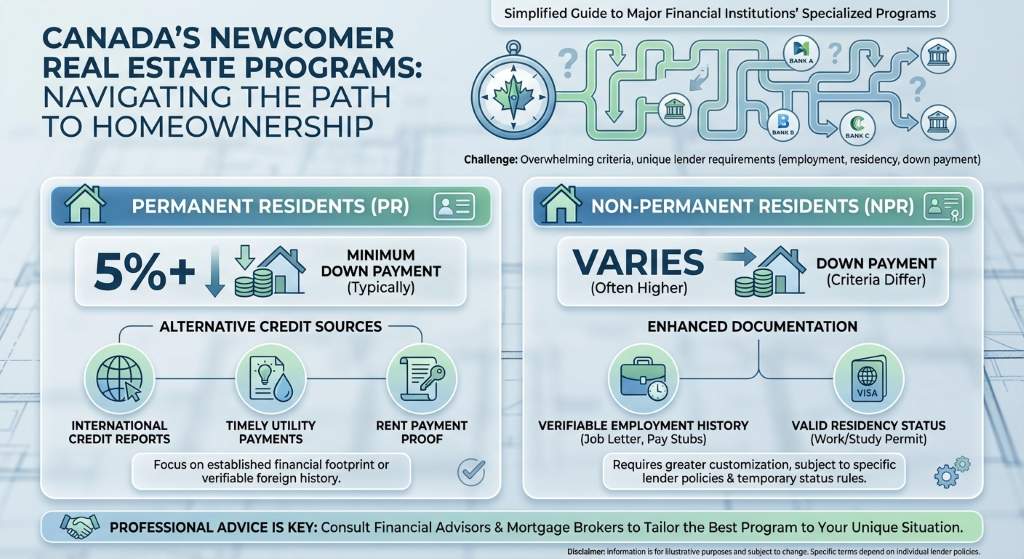 Canada’s major financial institutions offer specialized programs to help new residents enter the real estate market. However, navigating these newcomer programs from banks can be overwhelming. Each lender has unique criteria regarding employment history, residency status, and down payment requirements.
- Permanent Residents: Typically require a minimum 5% down payment and can use alternative credit sources like international credit reports or proof of timely rent and utility payments.
- Non-Permanent Residents: Work permit holders often need a minimum 10% down payment and must provide proof of a valid work permit and Canadian employment.
- Alternative Credit Options: If you lack a Canadian credit score, many lenders accept 12 months of rental payment history and utility bills to prove your financial responsibility.
As an independent Edmonton mortgage broker, Jason Scott shops over 20 lenders to find the most competitive rates for your newcomer mortgage Canada application. Banks often have strict, rigid guidelines, but we know which lenders offer the flexibility you need. More importantly, we are experts at providing second opinions on new-to-Canada and immigrant mortgages. If a bank has turned you down or offered a high rate, let us review your file.
| Mortgage Program Feature | Typical Bank Requirement | Alternative Lender Option | CMHC New to Canada Insured |
|---|---|---|---|
| Minimum Down Payment | 5% to 10% | 20% (Flexible Credit) | 5% (Under $500k) |
| Credit History Needed | Canadian Score or Int’l Report | Flexible Alternative Credit | 12 Months Rent & Utilities |
| Employment Status | Full-Time Permanent | Contract or Self-Employed | Minimum 3 Months Full-Time |
| Residency Status | PR or Valid Work Permit | PR or Valid Work Permit | PR or Valid Work Permit |
How to Qualify and Why a Second Opinion Matters
Securing a new-to-Canada immigrant mortgage requires preparation. Lenders will look for a steady income, a valid work permit or permanent residency card, and a verifiable down payment. Because the rules can be complex, many newcomers are initially declined by their primary bank. Do not let a single rejection stop your homeownership dreams in the YEG real estate market.
Getting a second opinion is a crucial step. We regularly help clients who were told they could not qualify by finding lenders with policies tailored to their specific situation. Our personalized strategies are designed to save you thousands of dollars and make the process stress-free with local support. Ready to start? Contact Jason Scott today at 1-780-721-4879 for unbiased expertise tailored to Edmonton homeowners.
Q1: What is a newcomer mortgage in Canada?
A newcomer mortgage is a specialized home financing program designed for recent immigrants, permanent residents, and temporary workers who may not have a long Canadian credit history. It allows you to use alternative credit sources to qualify.
Q2: Can I buy a house in Edmonton on a work permit?
Yes, temporary residents with a valid work permit can qualify for a new-to-Canada immigrant mortgage. You will typically need a minimum down payment of 10% and proof of full-time employment in Canada.
Q3: How much down payment do I need as a newcomer?
If you have permanent residency, you can purchase a home with as little as 5% down for properties under $500,000. For properties over $500,000, the requirement scales up. Work permit holders generally need at least 10%.
Q4: How do lenders verify my credit if I am new to Canada?
If you do not have a Canadian credit score, lenders can use alternative credit profiles. This includes international credit reports, a letter of reference from your home country bank, or 12 months of verifiable rent and utility payments in Canada.
Q5: Why should I get a second opinion on my newcomer mortgage?
Bank guidelines vary significantly. If one bank declines your application or offers a poor rate, another lender might approve you easily. We are experts at providing second opinions on new-to-Canada and immigrant mortgages to ensure you get the best possible terms.